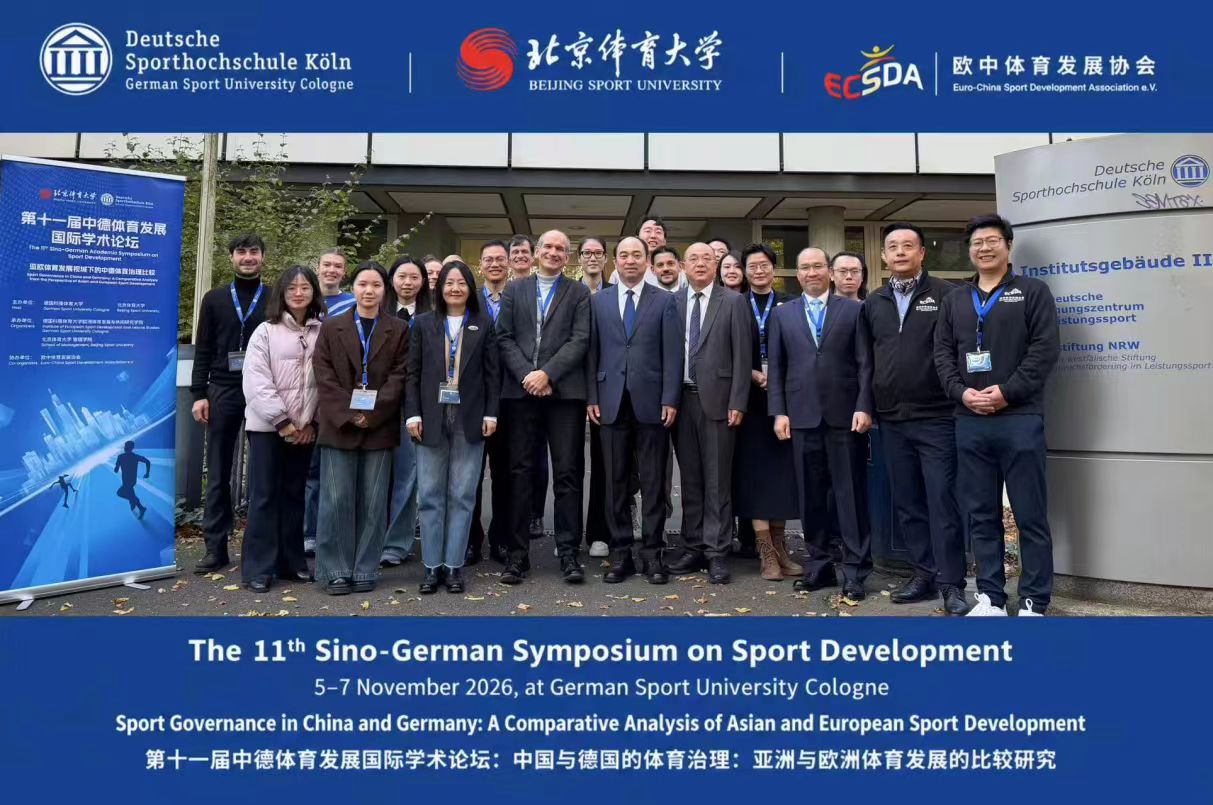

The 11th Sino-German Academic Symposium on Sport Development was recently held at the German Sport University Cologne. Jointly organized by Beijing Sport University(BSU) and German Sport University Cologne, the forum was themed Sport Governance in China and Germany: A Comparative Analysis from the Perspective of Asian and European Sport Development. It brought together experts and scholars from universities and institutions in China and Germany to exchange views on sport governance, international sporting events, health promotion, community sport and youth development, exploring ways to deepen exchanges and mutual learning in sport between the two countries and expand opportunities for cooperation.
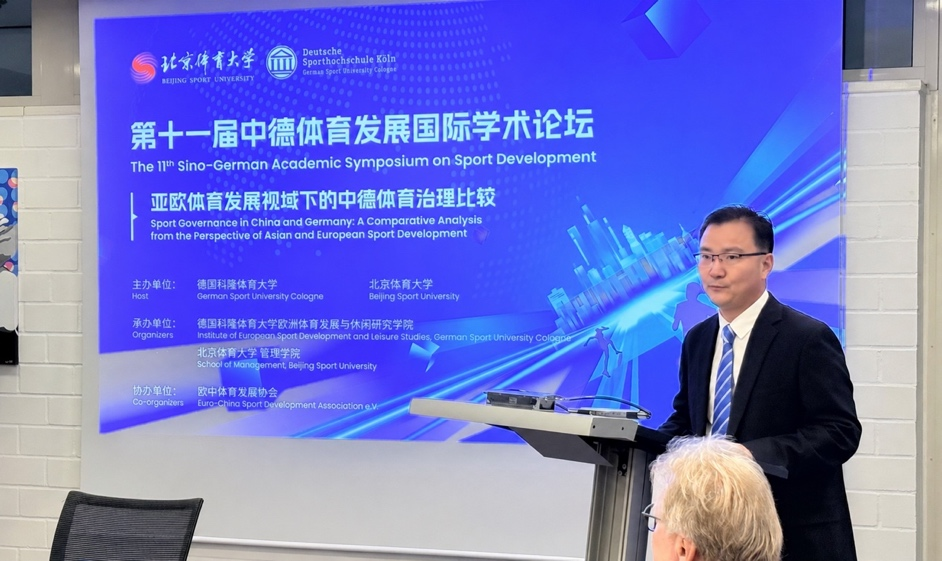
Yu Yong, Consul General of China in Düsseldorf, Germany, addressed the opening ceremony, saying, "This forum focuses on cutting-edge issues in sport governance and brings together the academic strengths of China and Germany to explore strategies for cooperation and development. It is not only an annual event for mutual learning and exchange between the two countries in sport higher education, but also a practical platform for strengthening people-to-people ties and consolidating bilateral friendship. Sport is an effective bridge for eliminating barriers, enhancing understanding and building consensus." Yu further noted, "Deepening sport exchanges and cooperation between China and Germany can help reduce perceptual biases through academic and people-to-people interactions, put the principle of multilateralism into practice, and contribute China-Europe insights to global sport governance."
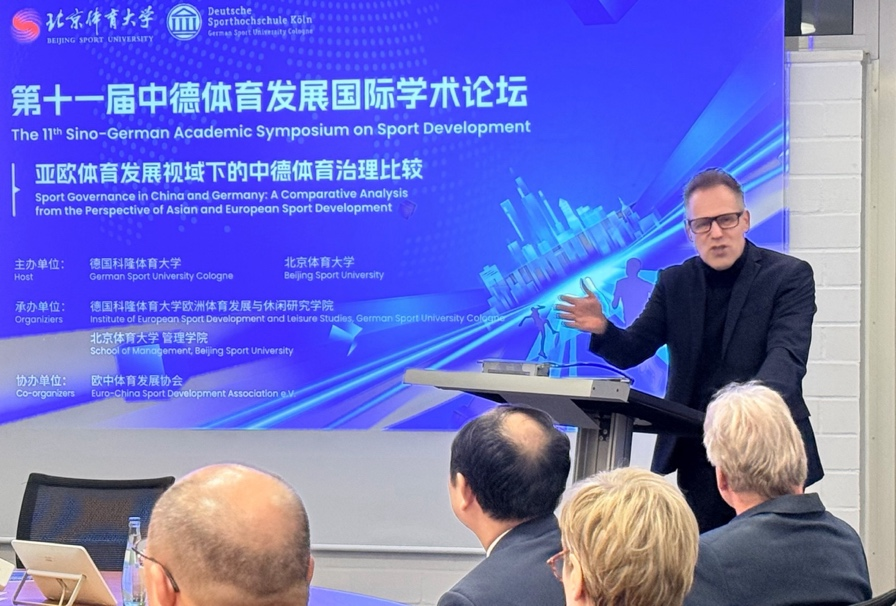
"Sport is deeply rooted in the traditions of individual countries and is also one of the most dynamic fields of international exchange. China and Germany differ in many aspects of their sport organization and management models, yet both are facing common challenges in transformation brought about by digitalization, commercialization and demographic changes. Comparative international research can help us move beyond established perceptions and broaden our academic horizons," said Ansgar Thiel, President of German Sport University Cologne. "The value of this symposium extends beyond the specific academic topics discussed. It demonstrates the deeper significance of academic cooperation in sport between China and Germany and provides a valuable platform for continued dialogue between the two sides."
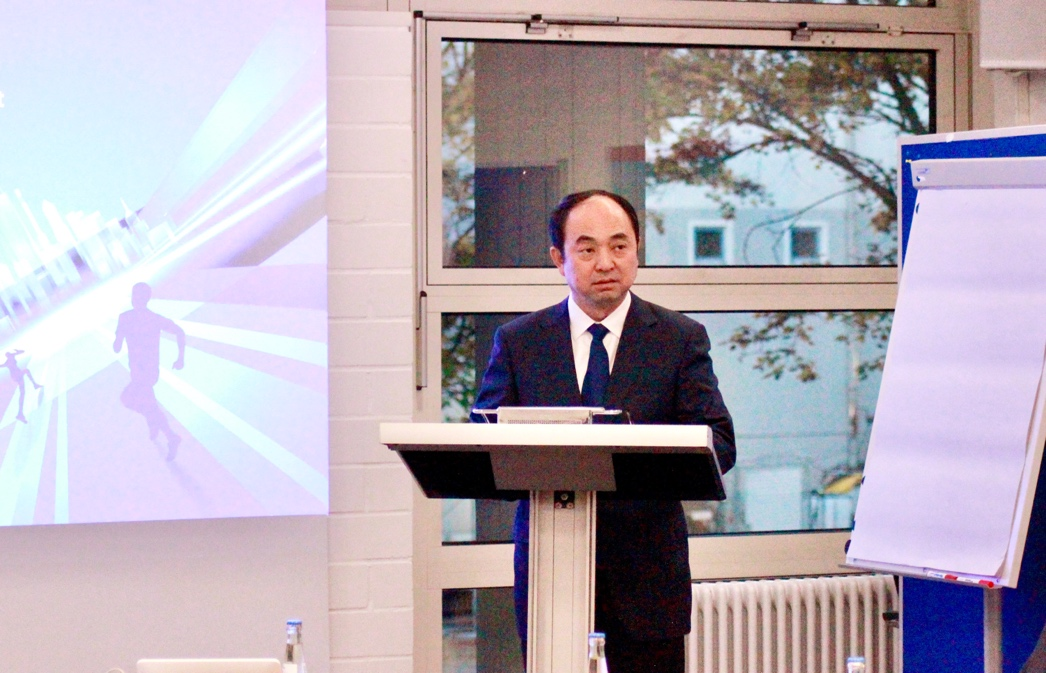
"BSU and German Sport University Cologne officially established their university partnership in 1981. The Sino-German Academic Symposium on Sport Development is a vivid testament to the friendship between the two universities. Since its launch in September 2012, the forum has evolved over more than a decade from an academic dialogue between Chinese and German universities into an important platform connecting sport scholars from China, Germany and across Eurasia," said Wang Ronghui, Vice President of BSU. "BSU will take this year's forum as a new starting point to further deepen practical cooperation between the two universities and work together to take China-Germany exchanges in sport and culture to new heights."
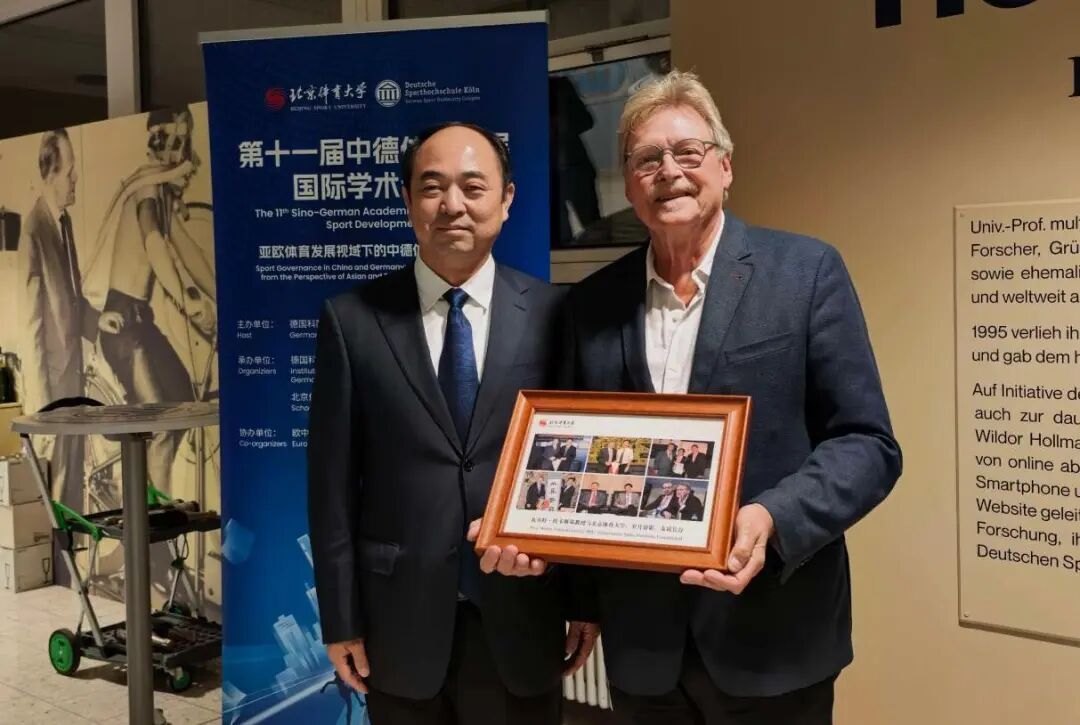
During the forum, an honorary medal presentation ceremony was held for Professor Walter Tokarski, former rector of German Sport University Cologne. On behalf of BSU, Wang Ronghui presented Professor Tokarski with a commemorative photo frame, capturing moments from his exchanges and friendship with BSU over the years. At a roundtable discussion, participants also exchanged views on Professor Tokarski's key areas of academic research, as well as his experience and contributions during his tenure at German Sport University Cologne.
The forum featured six thematic sessions and a young scholars' session. Participating scholars discussed topics including international sport event governance, sport governance in transition, sport transformation and strategic adaptation, sport, health and well-being throughout life, and local sport governance and community development.
In the session on international sport event governance, Professor Jürgen Mittag analyzed the 2026 FIFA World Cup, focusing on shared arenas, competing interests and FIFA's evolving role. Dr. Christoph Fischer traced the history of the World Games from their origins to Karlsruhe 2029, discussing Germany's role, sport policy and future ambitions. Professor Li Shengxin introduced China's practices and experience in leveraging Olympic events to promote nationwide fitness.
In the session on sport governance in transition, Professor Holger Preuss, Dr. Lorenz Fiege and Assistant Professor Huang Yuanyan delivered presentations on building transnational academic communities in sport policy, the interaction of institutional characteristics in the democratization of European sport governance, and structural coordination between elite sport and mass fitness in university sport governance, respectively.
In the session on sport transformation and strategic adaptation, Professor Christoph Bertling analyzed the impact of digitalization as a disruptive force on communication systems within German sport organizations. Dr. Kim Schu shared experiences in strategic management from European sport governing bodies, while Professor Xiao Shuhong discussed how artificial intelligence is empowering sport development and governance.
In the session on sport, health and well-being throughout life, Professor Astrid Schubring and Dr. Zhang Hanwei presented research findings on athletes' transitions after retirement and related health issues. Professor Wang Fubaihui explored the multidimensional value of sport in the context of population aging and healthy life expectancy.
In the session on local sport governance, Dr. Till Müller-Schoell, Dr. Achim Stenger, Professor Li Shanshan, along with collaborators Feng Huan and Associate Professor Li Xuewei, exchanged views on topics including how local sport policies promote active lifestyles and the inclusion of marginalized groups, the governance of local sport associations in Germany's Ruhr region, community sport and health governance in China and Germany, and the spatial and temporal characteristics and driving mechanisms of community sport in China's county-level regions.
At the young scholars' session, Dr. Yan Junhao and Dr. Ye Huihan presented their research on governance of the integration of sport and education in China and interprovincial distribution of student fitness, as well as social sustainability in sport governance organizations and strategies for supporting women coaches, respectively.
Through thematic discussions and the young scholars' session, the forum fostered mutual understanding among sport researchers from China and Germany and provided young scholars with opportunities for cross-cultural academic exchange and cooperation. BSU will continue to build on the forum to diversify forms of cooperation and expand research topics, promoting further progress in sport governance research, talent development and the practical application of academic findings.