
As the Winter Olympics flame was extinguished in Milan in Italy and the Chinese athletes began the return home with honor, a four-year scientific support effort behind the scenes also reached its culmination.
Behind the country's Olympics achievements — from the lightning speed of speed skating to the historic breakthrough in ski jumping and the artistry of figure skating — research teams from Beijing Sport University (BSU) played a crucial role.
Drawing on interdisciplinary expertise and years of dedicated work, they provided strong scientific support for the preparations of China's athletes.
Panoramic View: A Technological "Long March" from "Laboratory" to "Podium"
Throughout the Milan Olympic cycle, the scientific support provided by BSU evolved from assistance to individual disciplines into a comprehensive, interdisciplinary support system.
BSU research teams worked across a wide range of events — including speed skating, short-track speed skating, ski jumping, figure skating, the freestyle skiing halfpipe and the biathlon.
The service covered the entire preparations process, from training and competitions to after-event recovery.
From Professor Li Wei's team building a "multi-dimensional data-driven training decision" system for speed skating to Professor Wang Jun's team tracking the physiological functions of core athletes like Ning Zhongyan and Han Mei for over three seasons, scientific research data became deeply embedded in every facet of training plans.
Experts in the fields of sports physiology, biomechanics, psychology, nutrition and rehabilitation medicine all collaborated.
Associate Professor Wu Ying's team, while providing physiological monitoring for the ski jumping team, also processed video images and analyzed technical movements. The psychology team led by Professor Wang Yingchun and Teacher Sun Meirong built a solid "psychological defense line" for the athletes.
They did so by utilizing data monitoring, technical analysis and science-based training programs to provide systematic support for China's national winter sports teams in their Olympic preparations.
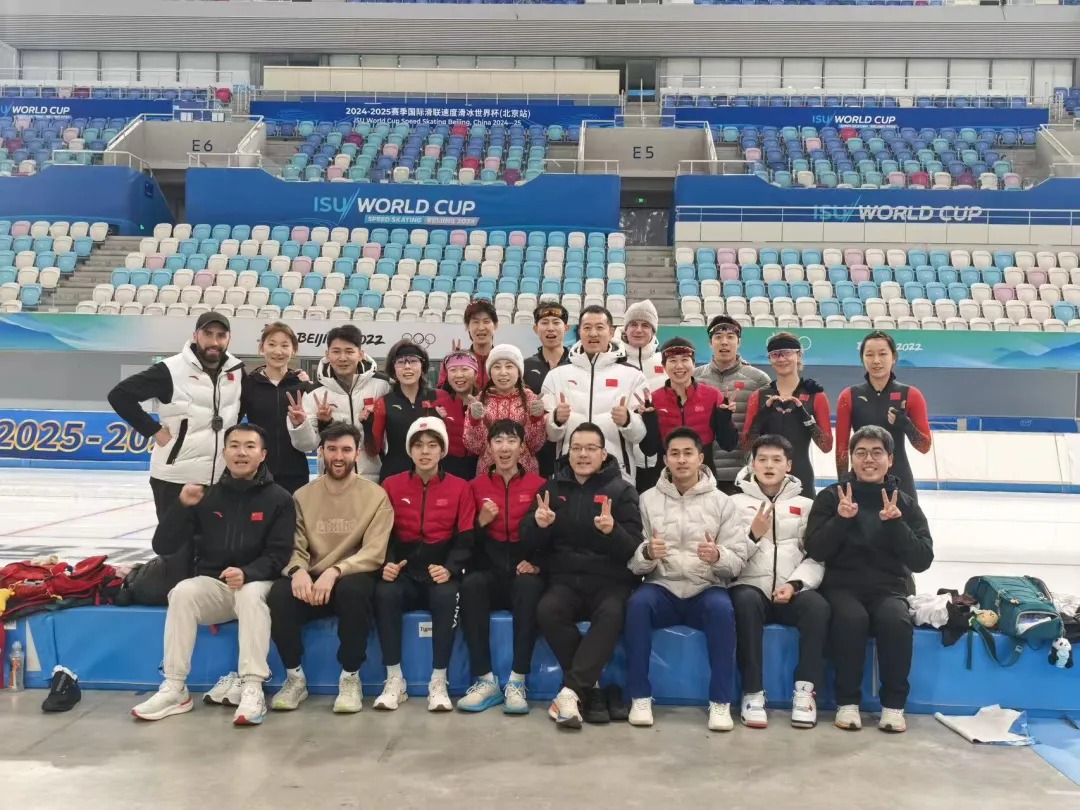
Wangjun's research team and China's national speed skating team pose for a group photo before departing for the Milan Winter Olympics.
Case Review: The "Ice-breaking" Battle Behind the Data
Decoding the "Secret of Speed": Making Every Push Count
Within China's national sprint speed skating squad, BSU professor Li Wei's team worked much like a group of "data detectives". Focusing on key athletes, they installed high-speed cameras and 3D motion capture systems — converting details such as the exact push-off angle at the start of the 500-meter race, precise body leans while cornering and even breathing rhythms into analyzable data.
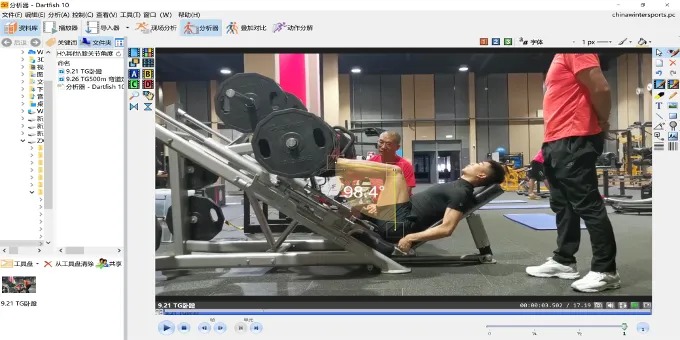
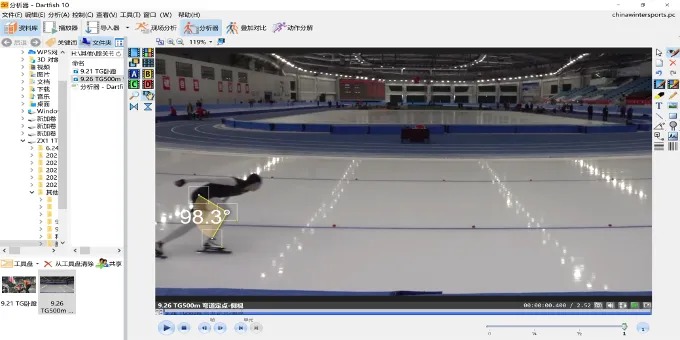
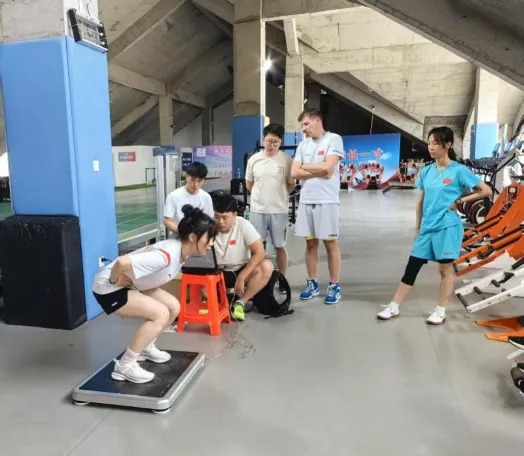
A member of the squad works on strength training and curve-skating drills.
By comparing these motion patterns with those of the world's top skaters, the researchers were able to pinpoint areas for technical improvement.
They developed an overspeed training system, using towing equipment and a fan matrix to help athletes break through psychological and physiological speed limits.
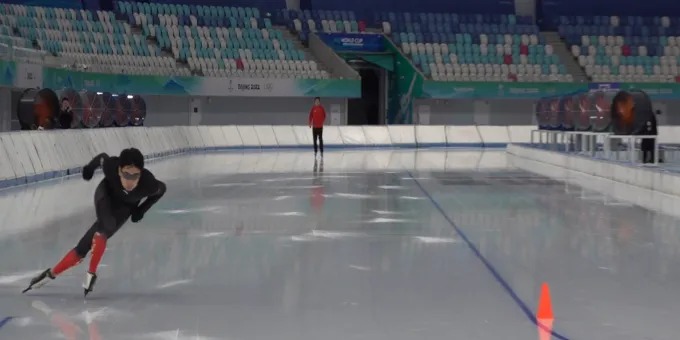
Race for perfection: An athlete trains on ice with the assistance of towing devices and a fan matrix.
From "31st Place" to "Silver Medal": Ski Jumping's Path to an Upset
Ski jumping was once a weak event for China, with an individual 31st place at the Beijing Winter Olympics. During the Milan cycle, Associate Professor Wu Ying's team witnessed and participated in an impressive turnaround. They were stationed long-term with the team, handling everything from physiological monitoring to technical analysis.
Wu Ying and head coach discuss the details of the "jump-flight" test
On January 1, 2026, a historic moment arrived: female athlete Zeng Ping won a silver medal at a World Cup event, China's first-ever medal in an international A-class event in this discipline. Ultimately, the Chinese ski jumping team secured five quotas for the Milan Winter Olympics, far exceeding previous cycles. Behind this breakthrough lie countless reviews of trial jumps under the "Snow Ruyi" and strong evidence of the scientific research team's deep involvement with the national team throughout the Milan cycle. They turned "impossible" into "possible" with data and hard work.
Building a "Psychological Defense Line": Maintaining Stability Under Extreme Pressure
In the pinnacle of competitive sports, mental state is often the final barrier to victory. Professor Wang Yingchun's psychology team undertook psychological support for several teams. They provided systematic services tailored to each team's specific needs, offering professional psychological support to speed skating, figure skating, alpine skiing, luge, bobsleigh, and parallel giant slalom snowboarding teams. Through lectures, book clubs, counseling, and competition psychological guidance manuals, the team helped athletes stabilize their inner state and assisted coaches in conducting training more effectively.
For the freestyle skiing halfpipe team, the team addressed the discipline's high difficulty, high risk, and athletes' issues related to injuries and psychological fluctuations. They built a multi-dimensional "psychological-behavioral-environmental" assessment model, customized psychological training plans using methods like painting psychological analysis, behavioral observation, and in-depth interviews to continuously promote inner stability and optimal competitive condition. This ultimately helped athletes secure a World Championship gold medal and an Olympic silver medal, showcasing the strong inner strength and self-regulation abilities of Chinese athletes to the world.
The psychological team's support also extended to figure skating. Teacher Ge Yang collaborated deeply with the singles skating coaching staff. Addressing the common problem of unstable performances among three national team athletes, they accurately identified individual cruxes through regular psychological consultations – relating to competition anxiety, media pressure, and training adaptation, respectively. Based on this, the team tailored short-term focused psychological training plans, integrating techniques like breathing exercises, imagery training, and adversity coping into daily practice, and provided on-site psychological support during numerous international and domestic competitions. Ultimately, two athletes continuously broke through themselves at events like the Denis Ten Memorial, World Cups, and Four Continents Championships, achieving season-best and personal best scores, respectively.
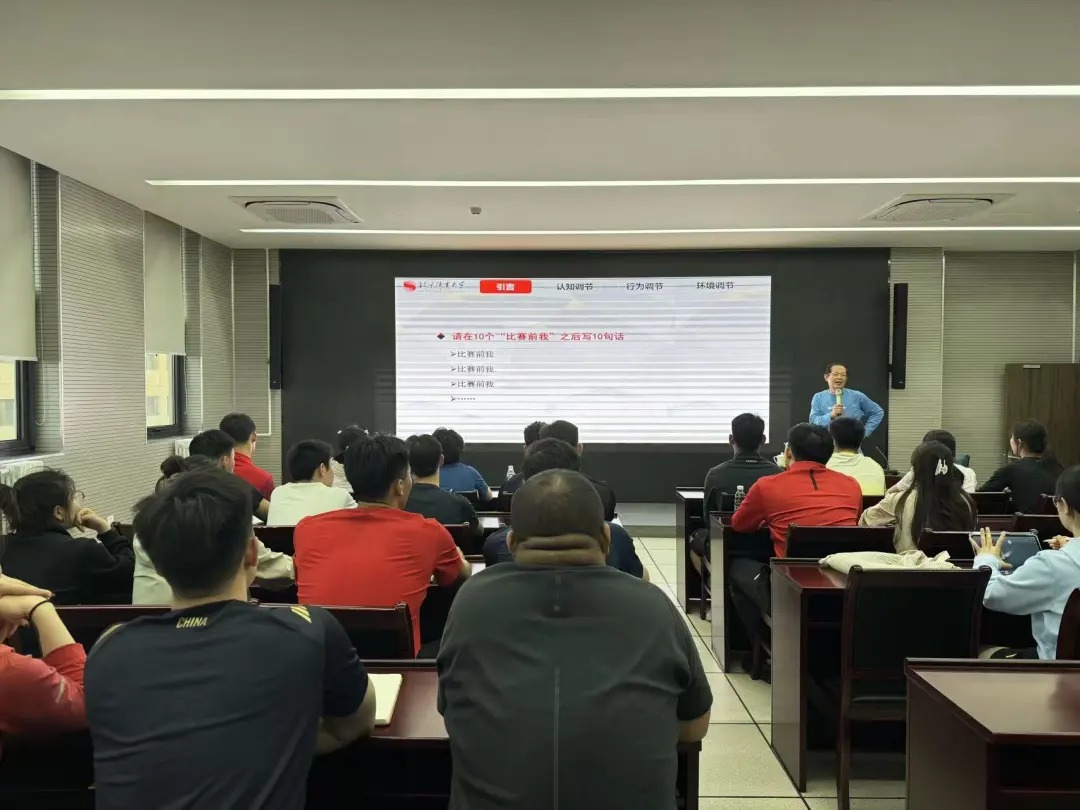
BSU Professor Zhang Liwei delivers a lecture to the national team.
Hardcore Support: The "Versatile Rear Base" for Technological Training Assistance
Located near Lugou Bridge in Beijing, the Erqi National lce and Snow Sports Training and Research Base of Beijing Sport University serves as a crucial support platform within the technological assistance system.
It’s not only a major training hub for multiple national teams during training rotations, but is also a bridge that integrates scientific research with on-ice and on-snow practice sessions.
During the critical preparations for the Milan Winter Olympic, the base provided key technical support to China's national bobsleigh team on many occasions.
Using its wind tunnel facility, the research team conducted precise tests on different crew combinations — measuring key indicators such as wind speeds, aerodynamic drag and statistical variations.
The results enabled coaches to identify the lineup with the lowest drag, allowing data-driven analysis to directly inform training and competition strategies.
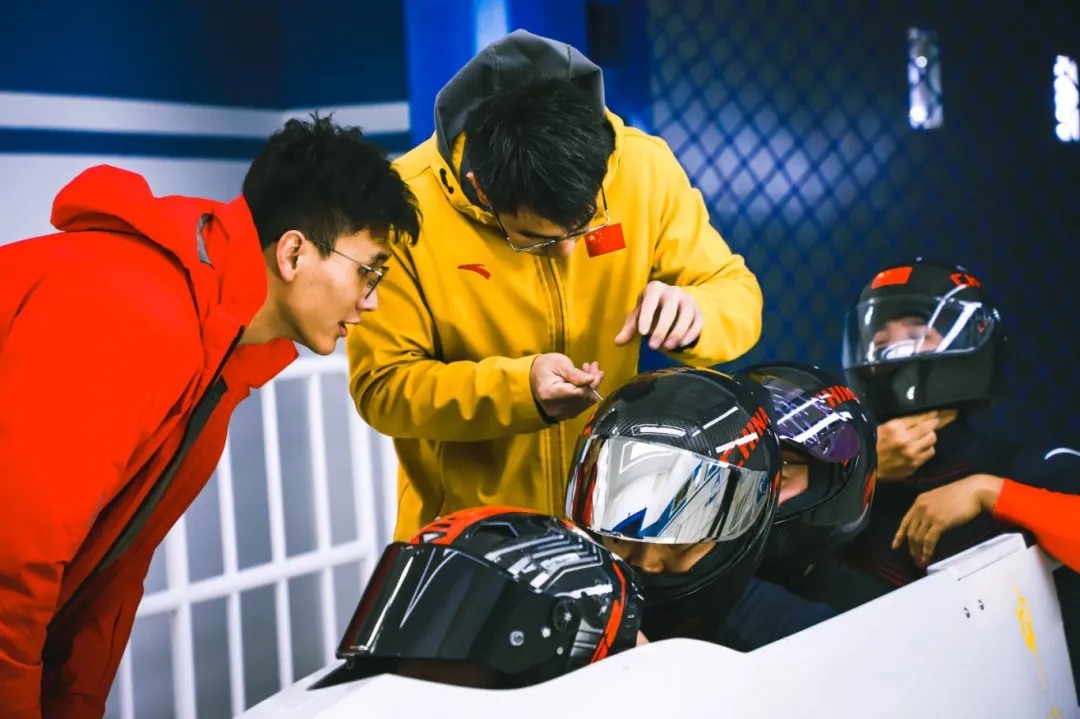
The national bobsleigh team undergoes wind tunnel testing.
Throughout the Milan Winter Olympics, the base served as a comprehensive support platform for the systematic preparation of multiple national teams.
It provided full-range training and research support for China's competitors in speed skating, alpine skiing, luge and the head-first ice-sled sport known as skeleton — facilitating over 3,000 training and testing sessions in total.
In addition to its wind tunnel lab, the base also deployed cutting-edge equipment such as launch simulators to support science-based training — helping athletes to achieve their best starts every time.
This fertile technological ground yielded fruitful results: Ning Zhongyan, who trained long-term at the Base, broke the Olympic record to win China's historic first gold medal in the men's 1500m speed skating event and also secured a bronze in the men's 1000m.
Together with his teammates, he added another bronze in the men's team pursuit.
The Chinese skeleton national team also demonstrated accumulated strength, finishing just one step away from the podium.
The luge national team achieved 7th place in the team relay, their best-ever Olympic result in this discipline.
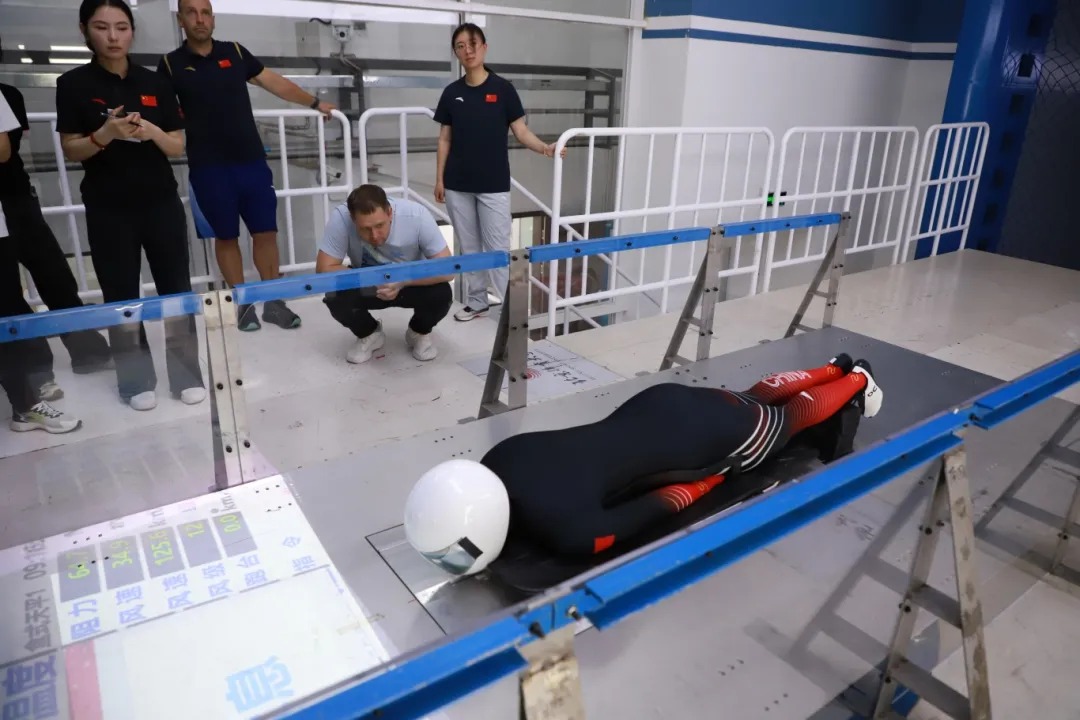
The skeleton team undergoes wind tunnel testing at BSU’s Erqi Base.
Summary of Contributions: "BSU's Answer Sheet" for Technological Services
Looking back at Milan, Beijing Sport University's technological services delivered an impressive "answer sheet":
Record Participation Scale: With the support of technological services, China's speed skating team secured 15 qualification spots, matching the record from the 2006 Turin Olympics. The ski jumping team secured 5 spots, achieving a leapfrog breakthrough.
Key Athletes' Frequent Success: Core athletes like Ning Zhongyan and Han Mei frequently won honors and stood on podiums in World Cup series. Gao Tingyu, after winning three golds at the Asian Winter Games, maintained a high competitive level at the Milan Games.
Mature Support Model: Data-driven training decisions, precise "one athlete, one plan" interventions, and integrated "training-medical-scientific-psychological" team collaboration – this "BSU Model" honed in practice withstood the ultimate test of the Olympics.
Looking Ahead: The Path of Deepening Integration Between Technology and Sports
The Milan Winter Olympics may have concluded, but the exploration of science-driven training is far from over.
Professor Wang Jun's team mentioned "deepening AI big data-driven training reform," and Professor Wang Yingchun's team envisioned research on psychological strategies shifting from "fear" to "action."
As technology continues to reshape elite sports, the integration of scientific research and athletic preparations will reach even greater depths.
When university laboratories seamlessly connect with the Olympic arena, and when professors and coaches become partners working side-by-side, we witness not only the success of a single Olympics but also the exploration of a future-oriented model for sports development.
It proves that in the pinnacle of competitive sports, technology is the most powerful "propeller," and the fusion of wisdom and sweat is the only path to excellence.
The flame in Milan has been extinguished, but those "technological dream builders" who toiled in the sea of data and stood guard on the training grounds are already packing their bags, preparing for the next four-year cycle.
It's expected that the knowledge accumulated and the invaluable experience gained during this Olympic cycle will continue to support the development of China's competitive sports in the years ahead.